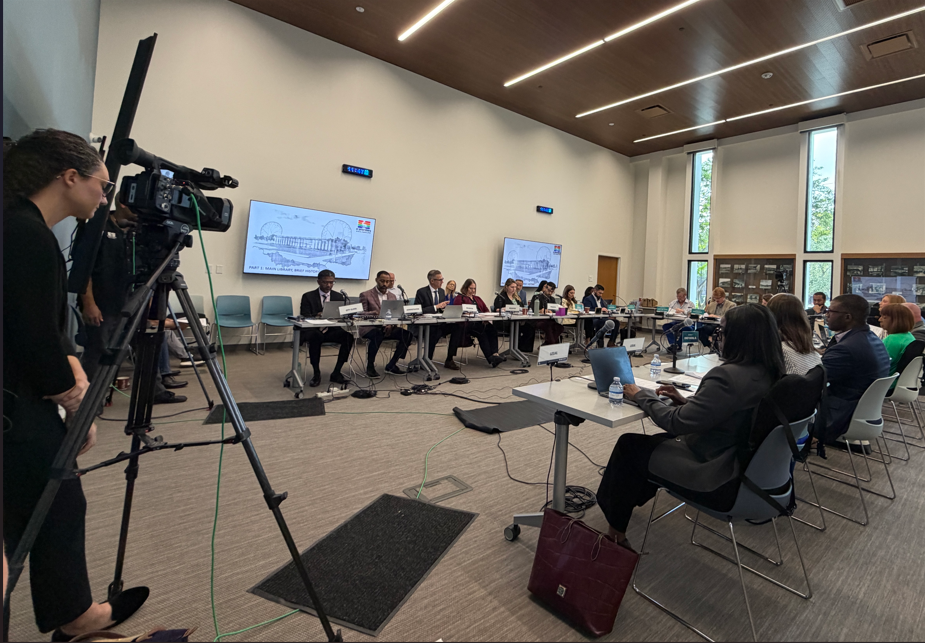
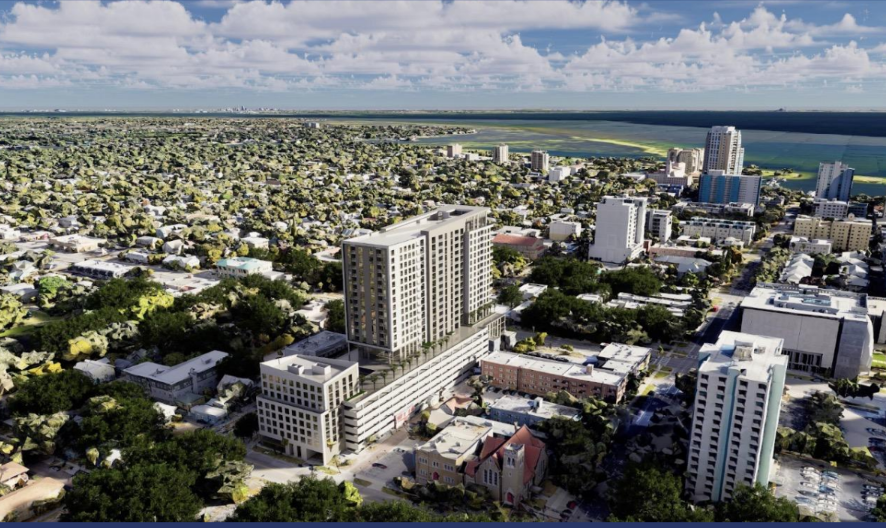
In a packed City Council chamber and following more than four hours of testimony, the fate of “The Pelican” came down to an uncomfortable reality: sometimes, a small number of votes carries outsized weight.
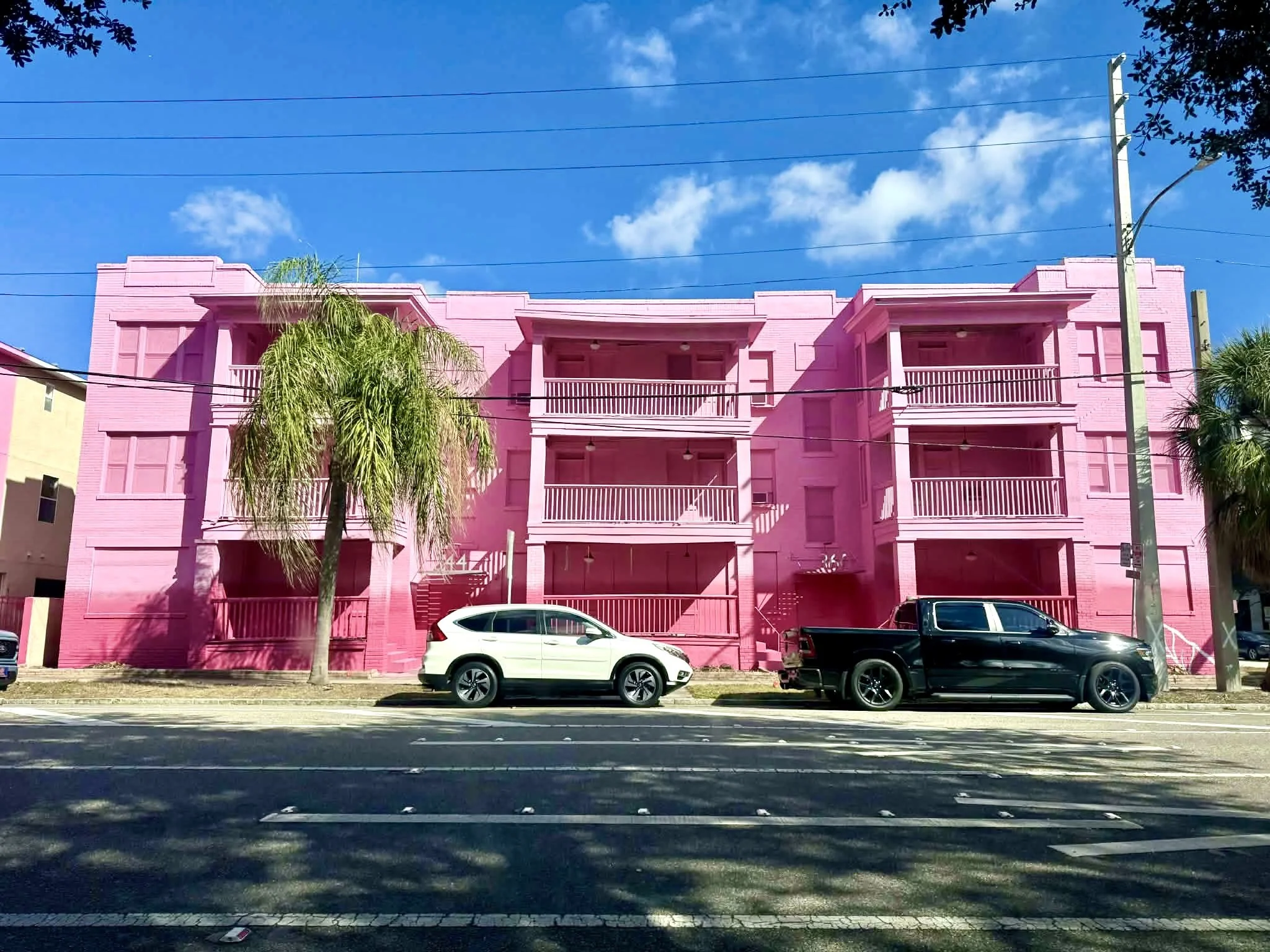
On Thursday, March 26, the St. Petersburg City Council fell one vote short of overturning approval of the proposed 21-story tower on 5th Ave. and 4th St. North, just across the alley from the Hollandar Hotel. The 4–3 vote did not meet the required supermajority to overturn Preserve the 'Burg's appeal of the Development Reivew Commission's approval of the Pelican development earlier this year. Council's decision to deny the appeal allows the project to move forward.
But the math of the moment continues to be a head scratcher.
Only three of eight council members ultimately cast votes that advanced the project. Between the 2 Development Review Commission meetings in which the Pelican was project was heard, eight different members were in attendance and voted - four voted yes, one voted no, and three voiced opposition but voted to continue the matter pending changes.
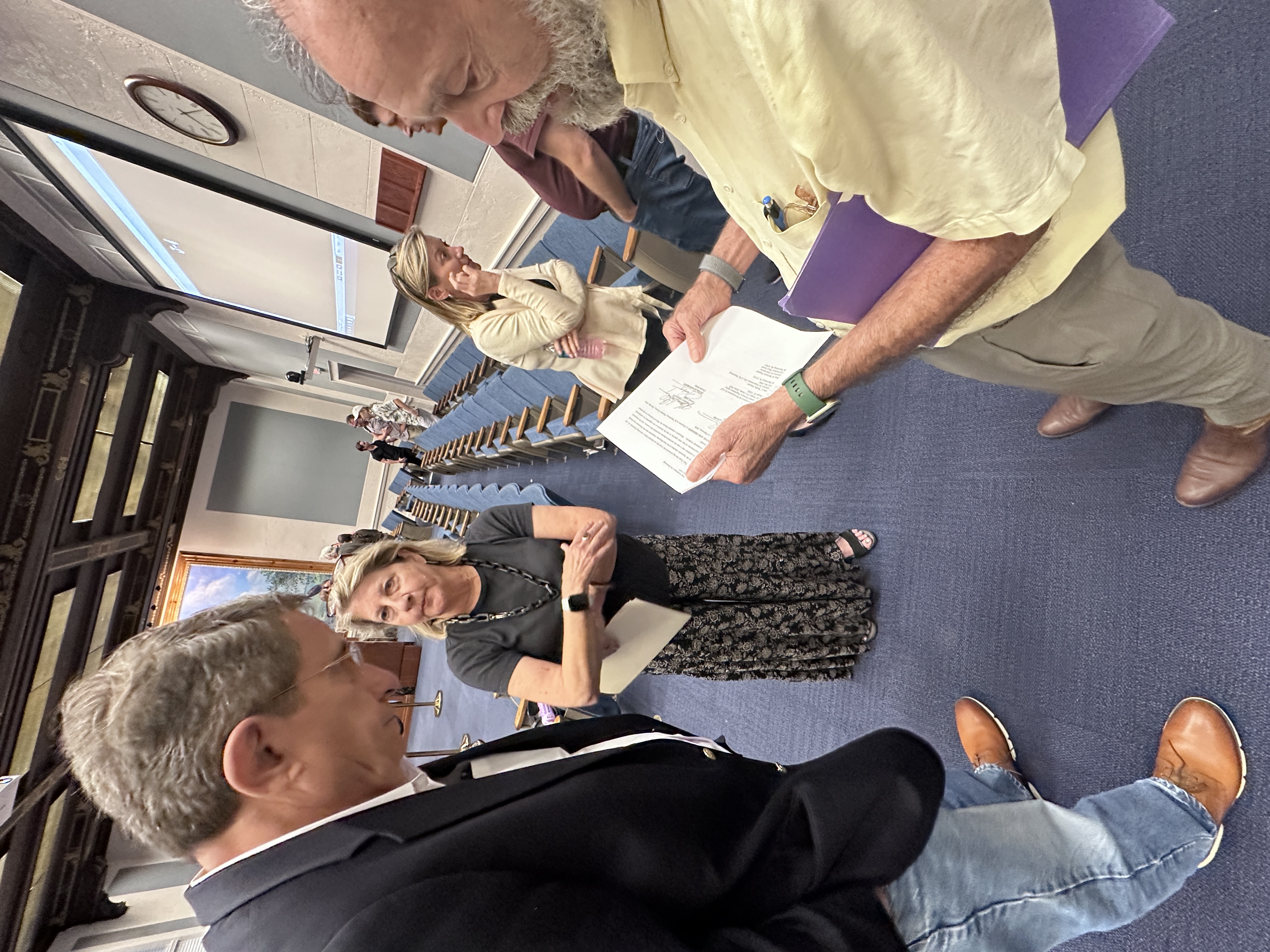
The math was the same when it came to public support.
In addition to roughly 100 letters submitted opposing the project and a room packed with concerned residents, the decision favored the minority of mostly business interests who spoke in favor of the project. Historic Uptown Neighborhood president Nori Morimoto, who's neighborhood is immediately in the shadow of the Pelican, presented the results of a neighborhood survey in which a majority of respondents expressed concern.
“I haven’t heard a resident say they appreciate this development,” said Councilmember Deborah Figgs-Sanders during deliberations, underscoring the disconnect between public sentiment and procedural outcome.
In contrast, support came from a notably small group: the Chamber of Commerce, the Downtown Partnership, and one local developer—former Council Member Robert Blackmon.
A divided council dais seemed to suggest they were handcuffed by the limits of its own rules, something members appeared to wrestle with in real time.
Council members repeatedly returned to a central tension: if a project meets the technical requirements of the code, their ability to deny it is limited. But as Preserve the ‘Burg Advocacy Chair Peter Belmont consistently pointed out, the code includes qualitative compatibility standards that allow decision makers to review a project’s mass and scale relative to its surroundings. As he put it, “yes, you can say no.”
Council member Mike Harting even said the quiet part out loud, exclaiming, “I don’t think that I would want to live next door to what this is,” before voting to make other people live next door to it.
The result means The Pelican will move forward. But it raises a larger question for St. Petersburg: if a minority of decision-makers can shape the skyline, what responsibility does the city have to revisit - or perhaps learn more about - the code that makes it possible?
Key Takeaways from “The Pelican” Hearing
Organized advocacy is effective—even without a win
Preserve the ‘Burg and its supporters presented a focused, code-based argument, while community members, young and old, wealthy and working class, filled the Council chamber and the city clerk received roughly 100 letters opposing the project. This kind of advocacy builds a public record that can inform future code updates and policy shifts.
A small number of votes can have an outsized impact
Only three of eight City Council members and four of ten Development Review Commission members cast the votes that ultimately advanced the project. That reality underscores how critical each vote—and each commission appointment—can be in shaping the city.
Compatibility standards need clarity
Much of the debate centered on “compatibility,” a requirement in the City’s Land Development Regulations that is intended to ensure new development relates appropriately to its surroundings. Our elected and appointed decision makers need guidance from city staff on how to apply these compatibility requirements.
The Development Review Commission needs a community representative and they need staff-directed training
Per the City’s description, the Development Review Commission “evaluates and acts on the development proposals within the City in order to ensure compliance with the Comprehensive Plan, zoning ordinance, and other appropriate City regulations.” Currently, the DRC is composed exclusively of developers, land use attorneys and other design professionals. That makes sense. You need people who understand the technical ins and outs of complex construction projects. But it also means that, at times, the perspectives of the DRC can be narrow in scope.
Also, per city staff, members of the DRC receive little to no training or onboarding. They can be appointed and immediately begin deciding cases. Yikes.
The “Height Map” needs refinement
The city’s Future Land Use Map and associated height allowances played a central role in the case. However, the hearing exposed confusion around how height transitions should occur—especially at the edges of lower-scale neighborhoods. Clearer guidance on step-downs, transitions and edge conditions would help avoid similar conflicts.
Leadership matters
The city has rules in place to ensure that downtown develops in a manner consistent with St. Pete's sense of place. However, it's easy for the rules designed to limit the maximum potential development of a project to be overlooked. It takes leadership at all levels to empower both staff and decision makers so they know they can question projects that fall short of keeping St. Petersburg special.
St. Petersburg can continue to grow and change without losing sight of its unique charcater and sense of place. After all, isn't that what's drawn people here for more than a century and continues to captivate newcomers today?